
Red Soles on Cobblestones: Christian Louboutin’s Love Affair with Lisbon
There’s a delicious irony in the fact that the man who made vertiginous heels a global status symbol has chosen to make his home in one of Europe’s hilliest cities. Lisbon, nicknamed “The City of Seven Hills,” is topographically challenging, particularly for those navigating its steep inclines—and let’s be clear: those signature red-soled stilettos are categorically unwearable on Alfama’s cobblestones. One misstep on those polished stones and you’re either snapping a heel or performing an unintentional splits. Yet Christian Louboutin has fallen so deeply for the Portuguese capital that he’s not just bought a home here, he’s woven himself into its cultural fabric—sensible footwear and all.

While most celebrities quietly acquire real estate and disappear behind high walls, Louboutin has done the opposite: he’s become a passionate curator of Portuguese culture, an evangelist for Lisbon’s unique aesthetic, and—perhaps unexpectedly—one of the city’s most ardent protectors of traditional craftsmanship.
A House in Alfama: Where History Meets Haute Design
Louboutin purchased a home in Alfama, Lisbon’s oldest and most atmospheric neighborhood, where narrow cobbled streets wind between traditional Portuguese architecture and the haunting sounds of fado drift from tavern doorways. This isn’t some modernist glass box overlooking the Tagus—it’s a deeply Portuguese space that reflects the designer’s magpie eye for beauty across cultures and centuries.
Inside his Lisbon home, objects from wildly different origins coexist: French pieces sit alongside Portuguese treasures, Indian artifacts neighbor Mexican crafts, all orchestrated into a harmonious chaos that somehow works. There’s an Indo-Portuguese 17th-century table, bespoke brass candelabras, paintings framed in golden curlicues, and a fireplace adorned with cherubim. It’s maximalism done right—each object tells a story, and together they narrate Louboutin’s aesthetic autobiography.
The choice of Alfama is telling. This is not the polished, tourist-friendly Lisbon of Chiado’s boutiques or Belém’s monuments. Alfama is raw, real, and ungentrified (though that’s changing). It’s where elderly ladies still hang laundry from wrought-iron balconies, where tiny grocers sell bacalhau and where getting lost is not just expected but essential to understanding the neighborhood’s soul.
From Comporta to Melides: A Portuguese Trajectory
Louboutin’s relationship with Portugal didn’t begin in Lisbon. He previously had a home in Comporta, which he frequented before it became the fashionable destination it is today—a pattern that reveals something interesting about his approach. He doesn’t follow trends; he identifies magic before it becomes commercialized.
When Comporta inevitably succumbed to its own success, Louboutin moved south to the quieter village of Melides, where he didn’t just buy another beach house—he collaborated with Portuguese architect Madalena Caiado to create Vermelho, a 13-room luxury boutique hotel that celebrates Portuguese craftsmanship and has been “designed at the scale of the hand”.
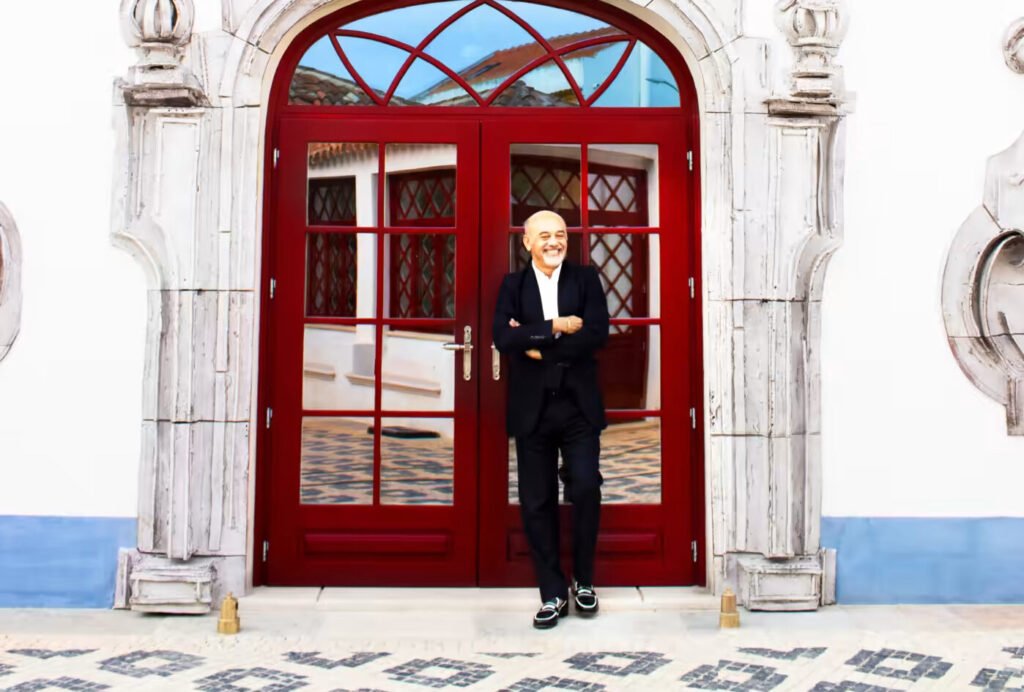
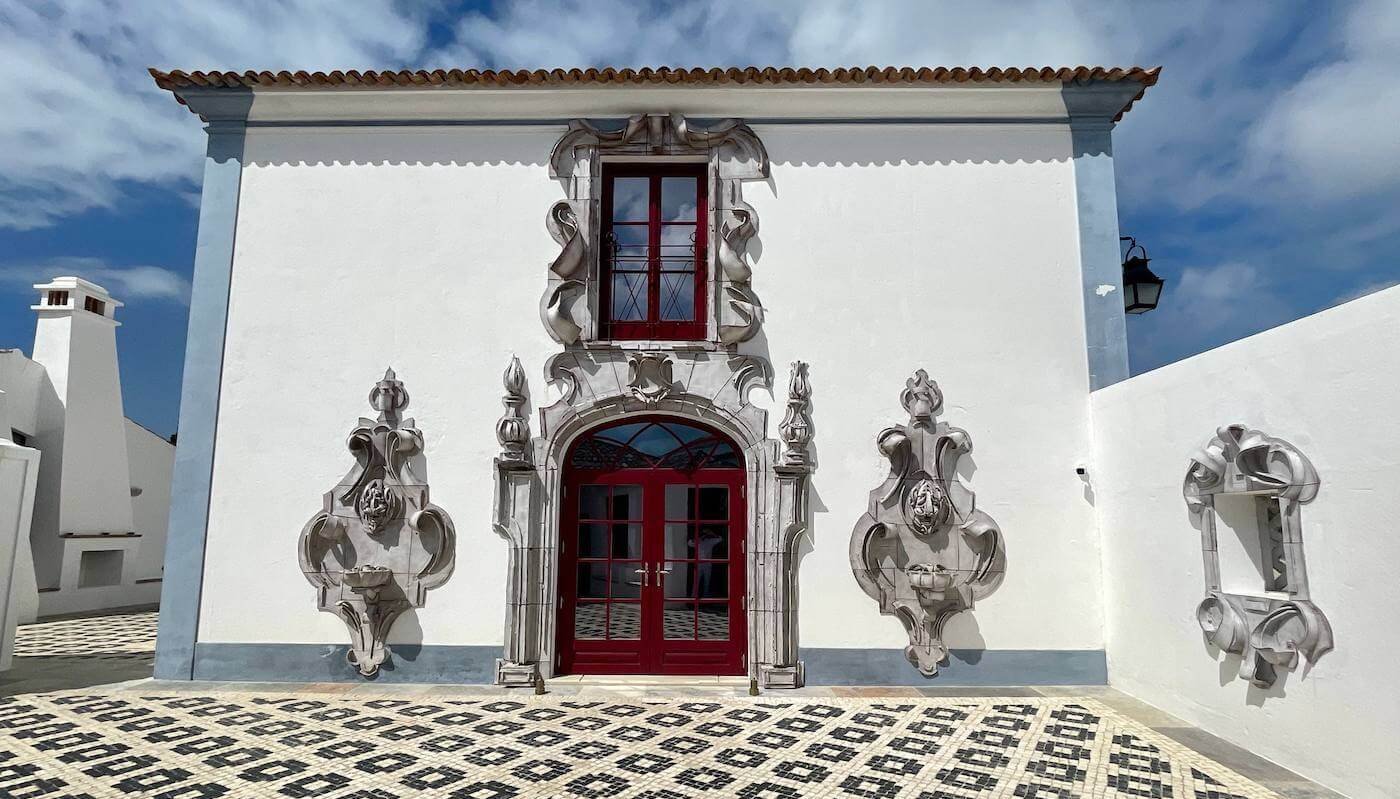
The hotel meets the street as a series of traditional buildings in the local architectural language: white render with blue plinth and window detailing, terracotta-tiled roofs and chimneys punctuating the skyline. From the outside, it looks like it’s stood there for centuries. Inside? Pure Louboutin—rich reds, intricate details, and an obsessive attention to craft that mirrors his approach to shoemaking.
Why Portugal? The Answer Is in the Details
What draws a Parisian fashion icon to a country that, let’s be honest, doesn’t immediately scream “haute couture”? The answer lies in Louboutin’s deeper aesthetic philosophy. He’s not chasing glamour for glamour’s sake—he’s chasing authenticity, craftsmanship, and objects that carry weight beyond their function.
Louboutin himself points to institutions like the Azulejos museum and the Calouste Gulbenkian Foundation as essential Lisbon experiences, revealing that his love for Portugal is rooted in its decorative arts tradition. The azulejos—those hand-painted ceramic tiles that adorn everything from churches to train stations—represent exactly what Louboutin values: meticulous handwork, vibrant color, and the elevation of functional objects into art.
There’s also something about Portugal’s relationship with beauty that resonates. This is a country where even the humblest café has carefully chosen tiles, where fishmongers arrange their catch like still-life paintings, where crumbling grandeur is considered more beautiful than polished perfection. It’s the anti-minimalism that Louboutin embodies in his own work.
Living Like Louboutin: His Lisbon Rituals
For breakfast (when he’s not intermittent fasting), Louboutin heads to Dear Breakfast in Alfama, right below the Sé de Lisboa church, where “you get the Lisbon vibe in a second, with its hills, stone pavements, the light and the antique tramways”. It’s a telling choice—not a trendy brunch spot but a place that encapsulates the city’s essence in a single meal.
For lunch, he favors Chapito a Mesa, located just below Castelo São Jorge, where the view of the city and the Tagus becomes “a scene in itself”. This isn’t about being seen at the right table—it’s about being in the right place to see Lisbon reveal itself.
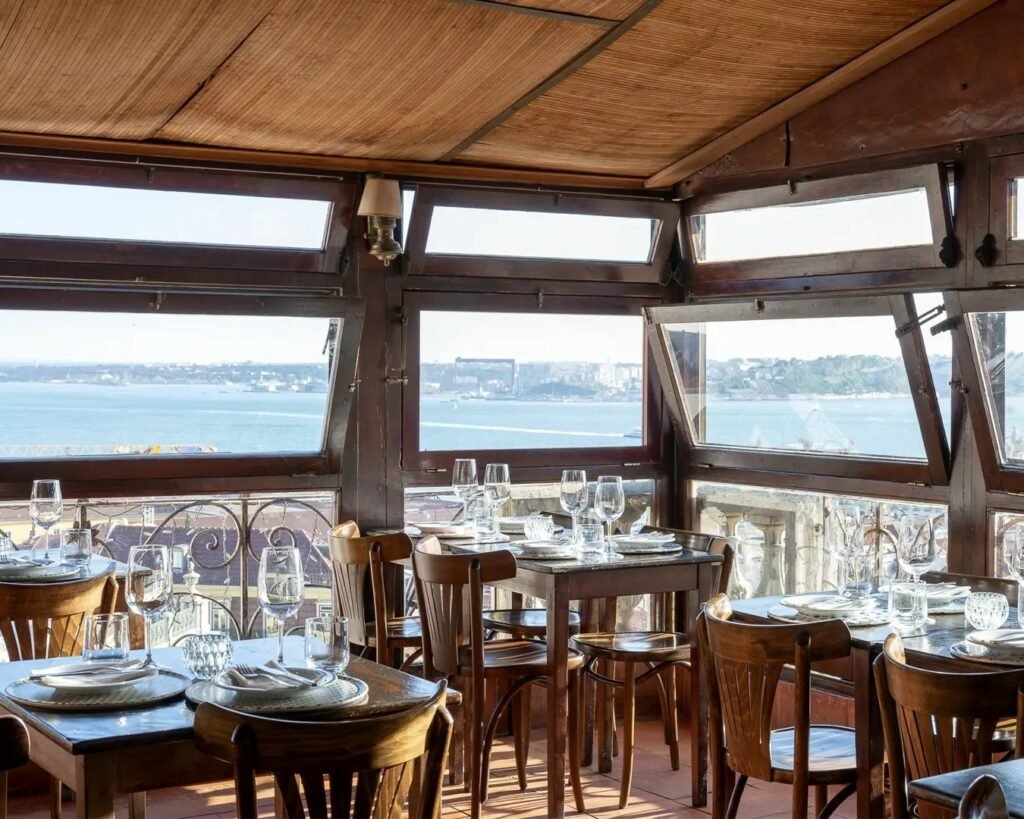
He also recommends Ponto Final, which offers panoramic views of Lisbon from across the Tagus, proving that even someone who works in a world of €1,000 stilettos appreciates the best things in life that don’t cost anything: light, water, perspective.
The Deeper Message: Preservation Through Appreciation
Here’s what makes Louboutin’s Portuguese adventure more interesting than celebrity real estate voyeurism: he’s actively participating in preserving traditional craftsmanship. Vermelho was conceived as an intimate retreat emphasizing layers of Portuguese craftsmanship, employing local artisans and celebrating techniques that were at risk of disappearing.
He shops at traditional establishments like Caza das Velas Loreto, a historic candle shop, and Vista Alegre for glassware—not because it’s exotic but because these places represent continuity, skill, and standards that matter to him.
In an age of fast fashion and faster trends, there’s something quietly radical about a major fashion figure choosing to invest his time and money into a country that moves at its own pace, values its traditions, and hasn’t completely surrendered to global homogenization.
The Verdict: Red Soles, Blue Tiles, Golden Light
Christian Louboutin’s Lisbon isn’t the one you’ll find on Instagram’s greatest hits. It’s quieter, more textured, less immediately instagrammable but infinitely more interesting. It’s about waking up in a centuries-old neighborhood, shopping at a traditional candle shop, having lunch with a view that makes you forget your phone exists, and understanding that real luxury isn’t about price tags—it’s about time, craft, and connection to place.
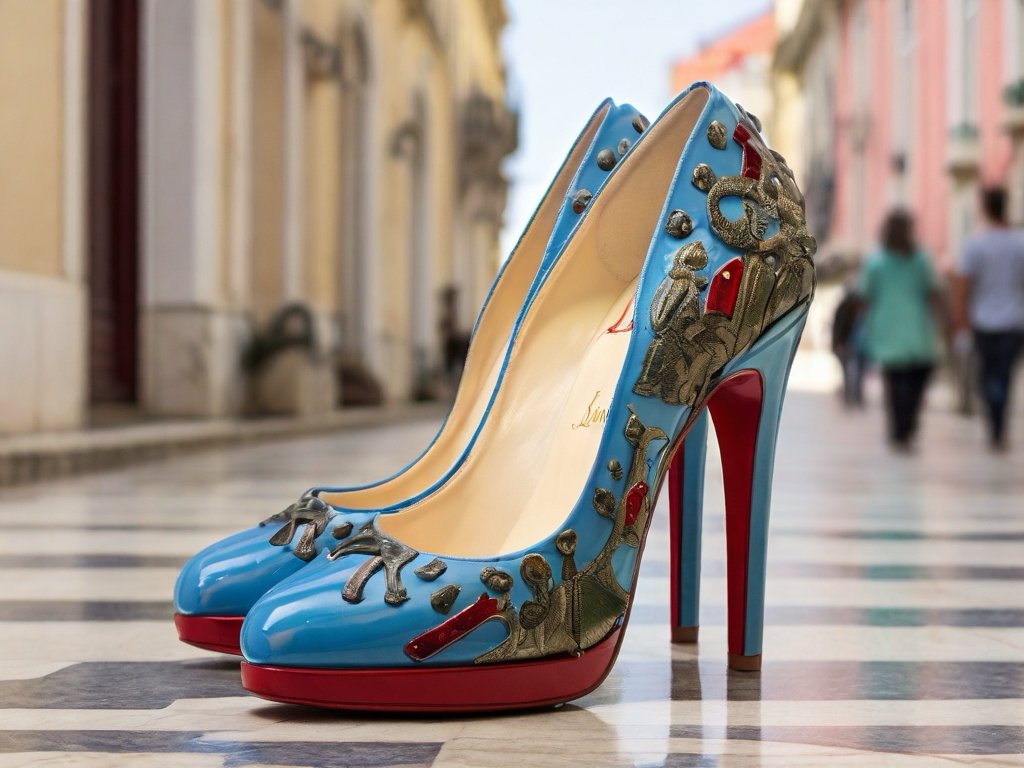
For a man whose shoes have walked red carpets worldwide, his choice to walk Alfama’s irregular cobblestones—definitely in something more practical than six-inch heels, because physics and Portuguese calçada simply don’t negotiate—says everything about what he’s found in Portugal: a place where beauty doesn’t announce itself, it accumulates. Where history isn’t preserved in museums, it’s lived in. Where the best view isn’t from the penthouse, it’s from the humble terrace of a neighborhood restaurant.
Lisbon didn’t change for Louboutin. And that’s precisely why he fell in love.
To go further : read this article in Visão



Leave a Reply