Henry the Navigator: The man who never sailed
Let’s start with the most delicious irony in Portuguese history: the man dubbed “Henry the Navigator” never actually navigated anything. Not one voyage. Not a single ship. He never circumnavigated Africa, never discovered the Azores firsthand, never felt the spray of unknown seas on his face. And yet, this landlocked prince from the rocky promontory of Sagres became the architect of Portugal’s golden age of discovery and fundamentally altered the course of world history.
First episode from our Collection :
Little Portugal to the Big World
Born on the Wrong Wednesday
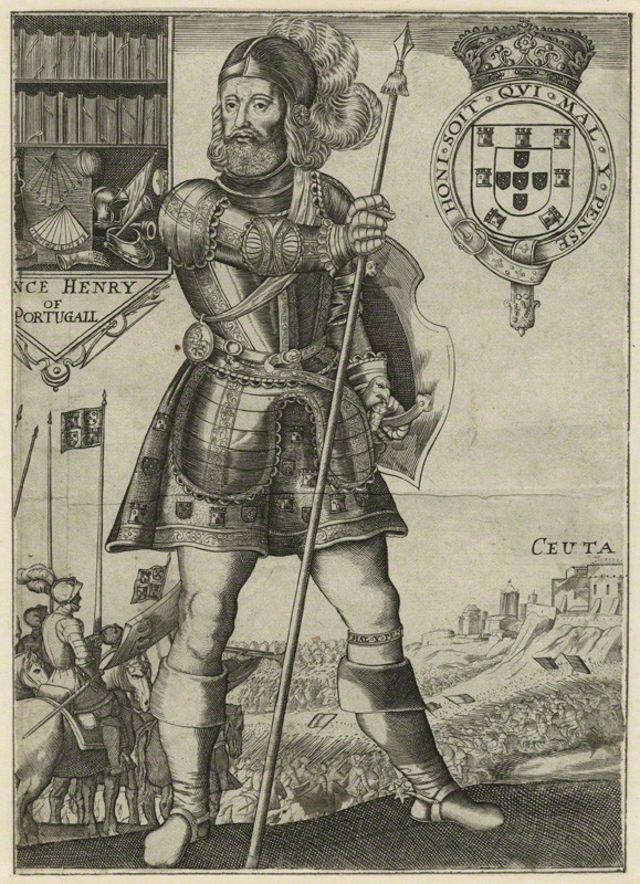
Henry was born on March 4, 1394—Ash Wednesday—a day considered deeply unlucky for a child to enter the world. His mother was Philippa of Lancaster, daughter of John of Gaunt, making him half-English by blood. As the third son of King John I of Portugal, Henry faced the classic royal problem: all the blue blood, none of the throne prospects.
So he did what any ambitious medieval prince would do: he found another way to make his mark.
Spoiler alert: it involved a lot of boats.
The name “Henrique” (Henry) was supposedly given in honor of his maternal uncle, Henry of Lancaster, who would become King Henry IV of England. Unfortunately, our Henry wouldn’t inherit a kingdom—he’d have to create an empire instead. Poor thing.
The Conquest That Started It All
At 21, Henry convinced his father to do something bold: cross the Straits of Gibraltar and conquer Ceuta, a prosperous Muslim port in North Africa, in 1415. Ceuta had long been a base for Barbary pirates who raided the Portuguese coast, capturing inhabitants to sell in the African slave trade.
The conquest worked. But more importantly, it gave Henry a glimpse of something intoxicating: the city’s wealth from trans-Saharan trade routes. Gold, spices, exotic goods—all passing through Muslim middlemen. Henry had an idea: What if Portugal could bypass these middlemen entirely and trade directly with the source?
It was essentially the 15th-century version of cutting out the distributor and going straight to the manufacturer. Capitalism was about to get nautical.
Sagres: The Medieval Think Tank
Henry established his base at Sagres, a desolate rocky promontory at the southwestern tip of Portugal where the land ends and the Atlantic begins. There he built Vila do Infante—a small court complete with a chapel, warehouses, a palace, a study, and even an observatory.
Here’s where history gets romantic and historians get cranky. For centuries, people believed Henry created a formal navigation school at Sagres—a medieval MIT for seafarers complete with classrooms and curriculum. Modern historians have debunked the “school” myth as too formal a description.
But what Henry actually created was arguably more impressive: Europe’s first systematic research and development laboratory for maritime exploration. He assembled the brightest minds from across the known world—Jewish cartographers fleeing persecution, Italian navigators with Mediterranean expertise, Muslim mathematicians with advanced astronomical knowledge, German instrument makers, Scandinavian sailors who knew northern waters, and Portuguese shipwrights with generations of Atlantic experience.
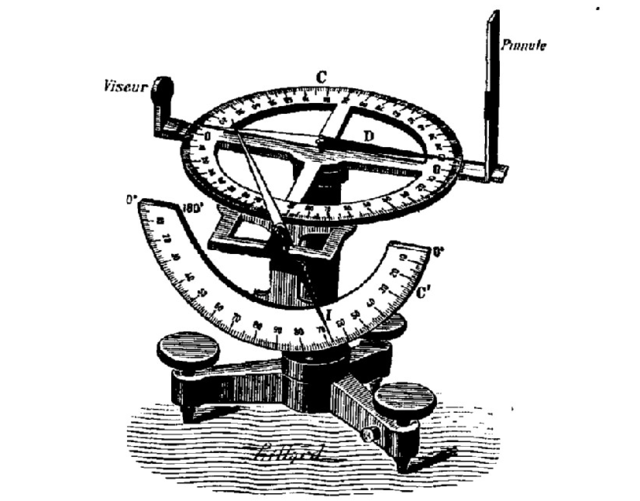
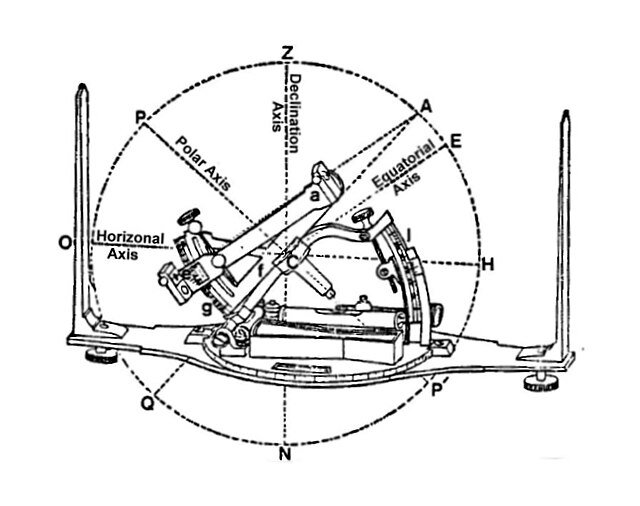
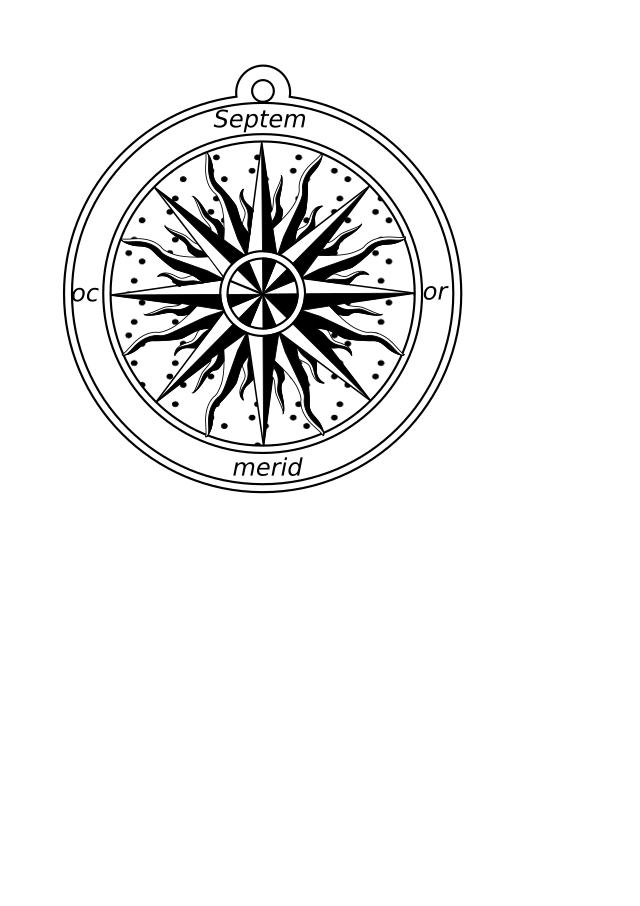
This wasn’t just collecting smart people in one place. Henry created what we’d now call a “collaborative research environment.” Cartographers worked alongside sailors who’d just returned from expeditions, immediately updating maps with fresh observations. Astronomers calculated improved tables for celestial navigation while instrument makers refined astrolabes to make those calculations practical at sea. Shipwrights experimented with hull designs based on feedback from actual captains.
Think of it as less “university” and more “Renaissance-era DARPA”—a well-funded laboratory where theoretical knowledge met practical experience, where failures were analyzed rather than hidden, and where every expedition generated data for the next one.
The Genoese—renowned for their business acumen and no strangers to maritime trade—were so impressed they offered to buy Sagres for an enormous sum. Henry declined. Some things aren’t for sale, especially when you’re trying to dominate global trade routes and you’ve just invented the concept of systematic R&D.
The Caravel: Medieval Tech Disruption
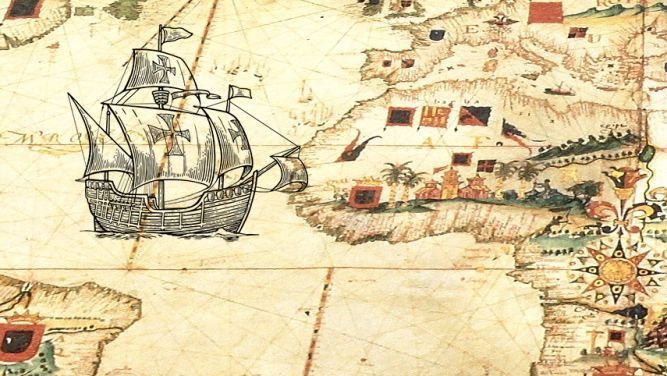
The cargo ships of the Mediterranean were too slow and heavy for coastal exploration. What explorers needed was something lighter, faster, more maneuverable. Under Henry’s direction, Portuguese shipbuilders developed the caravel—a revolutionary vessel that used lateen sails and could sail “into the wind,” making it largely independent of prevailing winds.
This was the iPhone of its era. The caravel was large and maneuverable enough for long-range ocean voyages while remaining agile enough for coastal exploration. Without it, the Age of Discovery doesn’t happen—at least not when it did, and not led by Portugal.
Henry didn’t personally design the caravel, but he funded its development, tested prototypes, and pushed for constant improvement. He was basically the venture capitalist of ship design.
Want to see what a caravel actually looked like?
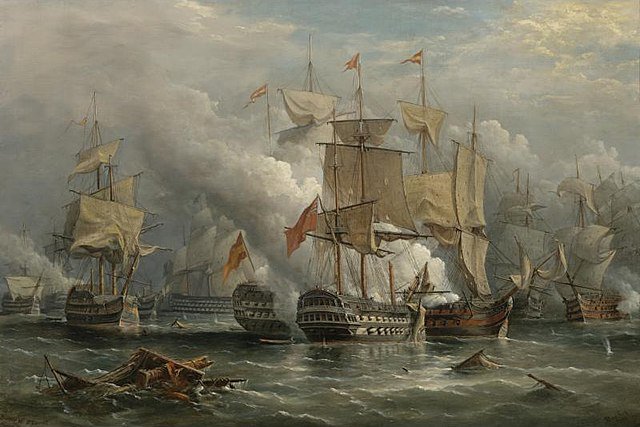
While you can admire detailed replica models at the Maritime Museum (Museu de Marinha) in Belém, for a truly immersive experience, visit the Frigate Dom Fernando II e Glória in Cacilhas, just across the Tagus River from Lisbon. This wooden-hulled, 50-gun vessel was Portugal’s last sailing warship and the last ship to undertake the Carreira da Índia (India Run)—the route that began in the Age of Discoveries. Built in 1843 in Daman, India, from Indian teak, you can actually board this magnificent ship and get a visceral sense of what life was like on these vessels. Take the ferry from Cais do Sodré to Cacilhas (a 10-minute ride with spectacular views of Lisbon), and step back into maritime history.
The Funding: Knights Templar Money
Here’s a detail that doesn’t make it into most tourist brochures: In 1420, Henry became governor of the Order of Christ, the Portuguese branch of the Knights Templar. This secretive, immensely wealthy religious order gave Henry access to vast financial resources.
Translation: Henry had deep pockets and a papal blessing to explore. The Portuguese Crown also granted him one-fifth of any profits from new trade routes beyond Cape Bojador, which is essentially commission-based exploration. Suddenly, Henry had both ideological cover (spreading Christianity) and economic incentive (getting obscenely rich) to fund expeditions.
Medieval crowdfunding at its finest.
Breaking Through Cape Bojador: Defeating Myths
For over a decade, Henry’s captains couldn’t get past Cape Bojador on the West African coast. Sailors feared the old legends that warned of a “green sea of darkness” swarming with monsters beyond the cape. It wasn’t entirely myth—the currents and winds were genuinely treacherous.
Finally, in 1434, one of Henry’s expeditions successfully rounded Cape Bojador, proving there were no sea monsters—just difficult navigation. This was crucial because before Henry’s time, no ship was capable of returning against the adverse winds and currents of the African coast.
The psychological barrier broken, by 1446 Henry’s navigators had reached the mouth of the Gambia River in equatorial Africa. By 1462, the Portuguese had explored as far as present-day Sierra Leone.
The Discoveries (That He Never Saw)
During Henry’s lifetime, Portuguese explorers discovered the Madeira Islands and the Azores. Between 1453 and 1456, Alvise Cadamosto explored the Atlantic coast of Africa and became the first European to reach the Cape Verde Islands.
But the really big payoffs came after Henry’s death. In 1487, Bartolomeu Dias proved Africa could be circumnavigated when he reached the Cape of Good Hope. In 1498, Vasco da Gama became the first European sailor to reach India by sea—the ultimate goal Henry had dreamed of.
Even Christopher Columbus spent eight or nine years with the Portuguese before his famous 1492 voyage and used the Azores as a springboard. Columbus essentially graduated from Henry’s system before starting his own gig.
The Dark Side: The Slave Trade
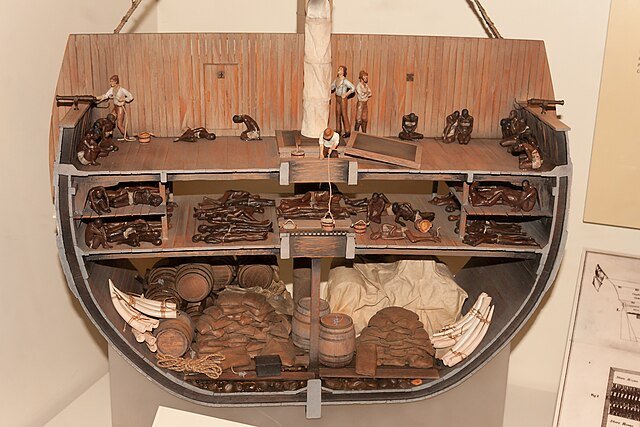
We can’t discuss Henry without addressing the uncomfortable truth: he sponsored expeditions and inaugurated the Portuguese slave trade. In 1441, a ship returned from the West African coast with gold dust and slaves, after which Henry turned his attention to exploiting those resources.
This isn’t a minor footnote—it’s a central legacy. The exploration Henry funded didn’t just map coastlines and establish trade routes; it initiated centuries of Atlantic slavery.
History is rarely tidy, and heroes are rarely unblemished. Henry’s vision opened the world, but it also opened wounds that still haven’t fully healed.
The Family Tragedy
After the death of his brother King Duarte, Henry became regent alongside his brother Peter, since King Afonso V was too young to rule. Later, a conflict erupted between Peter and King Afonso V, culminating in the Battle of Alfarrobeira in 1460, where Henry sided with the King against his own brother Peter, who was killed by a stray crossbow bolt.
Henry died later that same year. He was given an impressive tomb in the Batalha Monastery, never living to see the full extent of the Portuguese Empire his work had launched.
The Legacy in Stone and Sea
If you want to pay your respects to the man who never sailed, Portugal has thoughtfully scattered statues of him across the country—each capturing a different facet of his legacy.
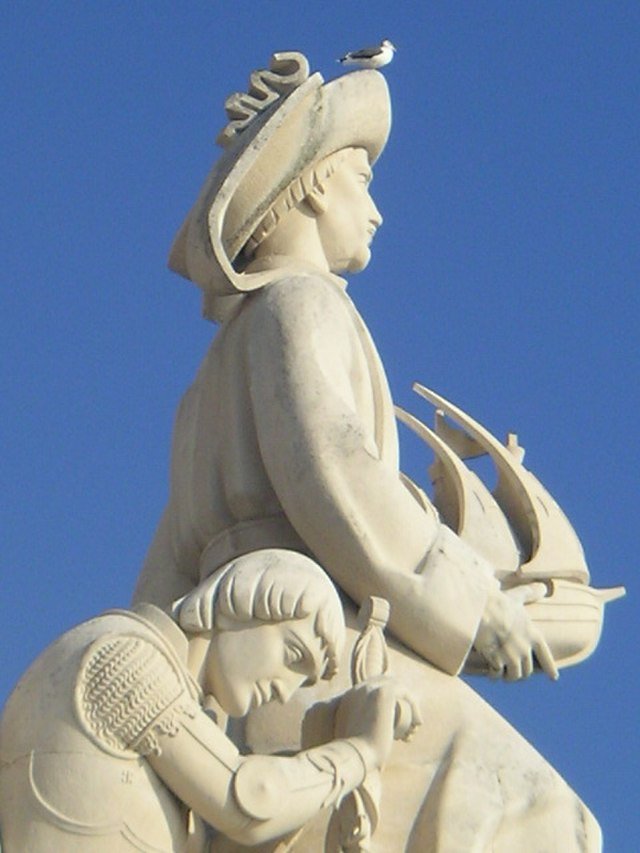
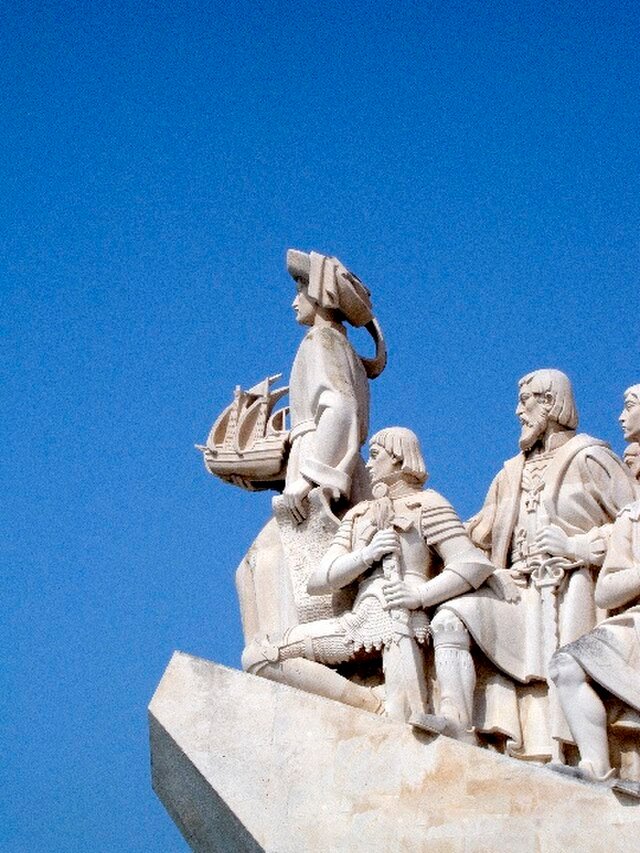
In Lisbon: The Monument to the Discoveries (Padrão dos Descobrimentos) in Belém is the most spectacular. This 52-meter (170-foot) tall limestone structure, shaped like a caravel, was reconstructed in 1960 to commemorate the 500th anniversary of Henry’s death. Henry stands at the prow holding a model of a carrack, leading 33 figures from Portugal’s Age of Discovery. You can take an elevator to the top for panoramic views of the Tagus River and Belém, or admire the massive marble compass rose on the pavement below—a gift from South Africa showing the routes of Portuguese explorers.
In Porto (his birthplace): In the Jardim do Infante Dom Henrique stands an elaborate statue designed by sculptor Tomás Costa and unveiled in 1900. The pedestal features the conquest of Ceuta on one side and Henry at Sagres on the other, with inscriptions reading “To Prince Henry the Navigator, Pioneer of the Discoveries of the Portuguese. Porto, your homeland. Dedicate it.” It’s located right across from the Stock Exchange Palace, making it easy to visit.
In Lagos (Algarve): A statue in the main square commemorates the prince who used Lagos as a launch pad for many expeditions, inaugurated in 1960 and sculpted by Leopoldo de Almeida. The pedestal reads “Infante D. Enrique”—not “Navigator,” which wasn’t his contemporary title. Lagos was his operational base in the Algarve, where much of the practical work of organizing expeditions happened.
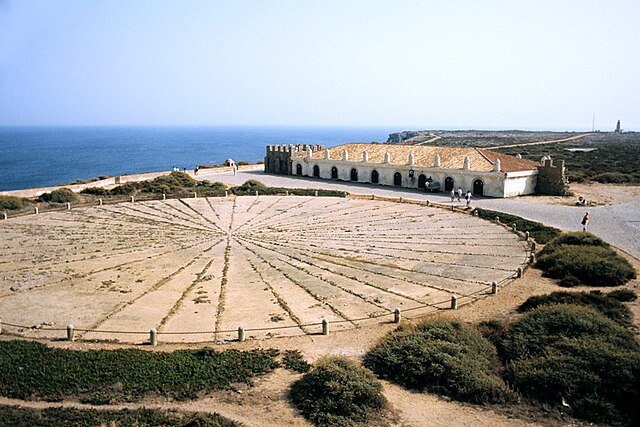
In Sagres: Near the tourism office stands a statue of Henry with map in hand, pointing out to sea—perhaps the most poetic of all, given this windswept promontory was where he established his base. The Sagres Fortress itself is worth visiting for its dramatic clifftop location and the famous Rosa dos Ventos (wind rose) pebble compass discovered in 1928.
His chronicler Gomes Eanes de Zurara wrote of him: “He had force of mind and acute intelligence in a high degree. His desire to accomplish great deeds was beyond all comparison.”
That checks out. The man who never sailed launched a thousand ships. The prince who couldn’t inherit a throne built an empire. The Navigator who never navigated changed the entire map of the known world.
Not bad for someone born on the unluckiest day of the year.

Leave a Reply