
You have walked past Salazar a hundred times this week. You just didn’t know it.
Between 1932 and 1968, António de Oliveira Salazar ran Portugal with an iron grip and a very tidy aesthetic. He was not an architect. He never held a paintbrush. He barely travelled. And yet, in four decades, he reshaped Lisbon more profoundly than anyone since the Marquis of Pombal.
The trick? He did it in stone, in concrete, and in silence.
1940: The Year Lisbon Became a Stage Set
1940 gave the regime a gift: a double anniversary. 800 years since the foundation of Portugal, 300 since the Restoration of independence. Salazar’s answer was the Exposição do Mundo Português — the Portuguese World Exhibition — staged in Belém.
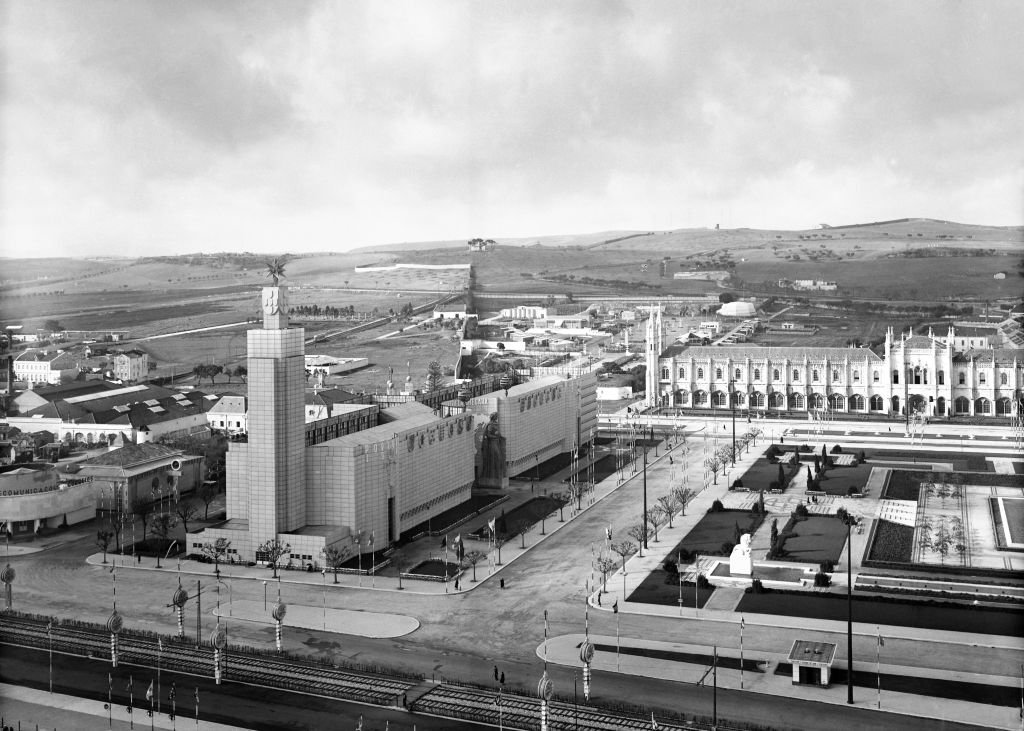
To pull it off, he recalled Duarte Pacheco as Minister of Public Works in May 1938. Pacheco also presided over the Lisbon city council, which meant one man now held the power to redesign the capital as the “imperial” showcase the regime dreamed of.
It took two years. It transformed over 560,000 square metres.
And it required a small erasure. Belém in the 1930s was not the elegant riverside you know today. It was a working district — factories, docks, warehouses, even a gasometer — and all of it crowded the view of the Jerónimos Monastery. The exhibition swept it aside and replaced it with a monumental axis running from the monastery to the river, anchored by the vast Praça do Império.
The Monument That Was Never Meant to Last
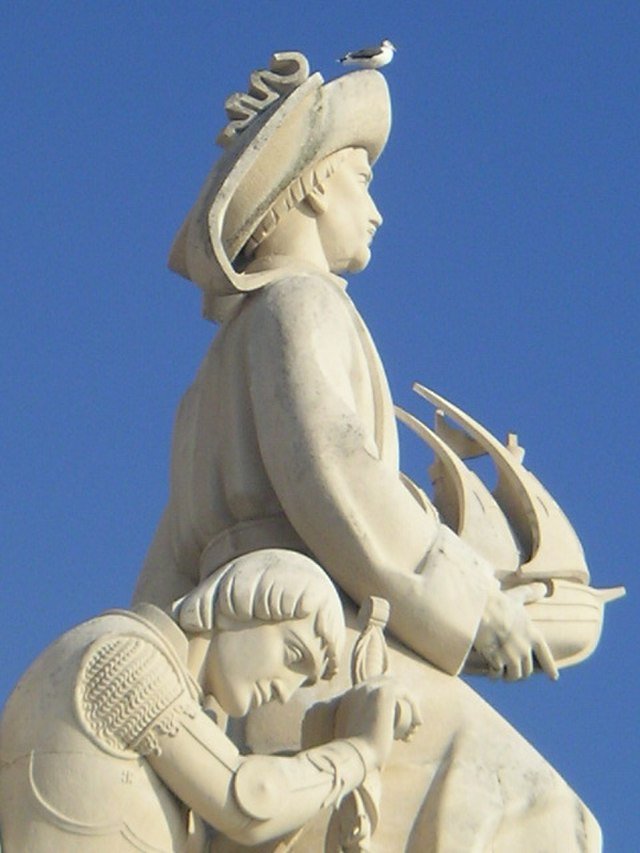
The star of the 1940 exhibition was the Padrão dos Descobrimentos — the Monument to the Discoveries. Henry the Navigator at the prow, thirty-three figures of the Age of Discovery trailing behind him, all carved in wood and plaster.
It was temporary. It stood until 1958. Then, because it had become so popular, it was rebuilt in concrete and stone and permanently installed — timed for 1960, the 500 anniversary of Henry’s death.
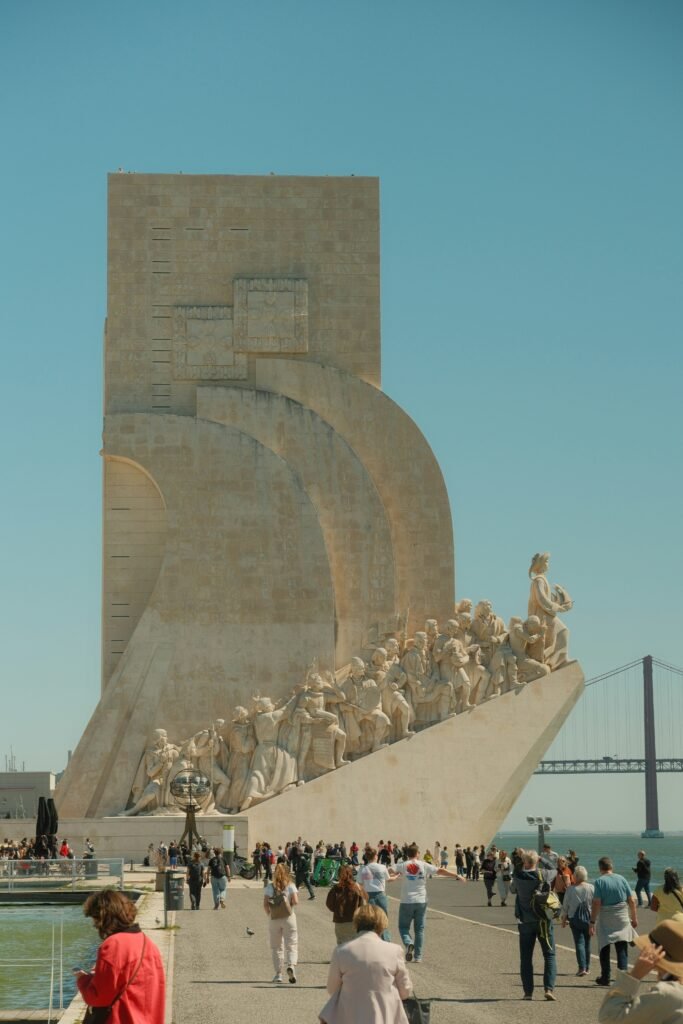
Today it is one of the most photographed silhouettes in Portugal. Nobody looks at it and thinks “state propaganda.” That is precisely what makes it effective.
The Middle Ages, Rebuilt in 1940
Here is where it gets sneaky.
Across Portugal, the Estado Novo poured money into restoring monuments. But as researchers have documented, those restorations did not follow the accepted theories of architectural conservation. They followed the official narrative instead — and that narrative adored the Middle Ages.
The clearest example sits on Lisbon’s highest hill. The Castelo de São Jorge was extensively rebuilt between 1938 and 1940. Ancient structures were pulled out of the rubble of earlier demolitions, and the castle was polished into the romantic medieval fortress we visit today.
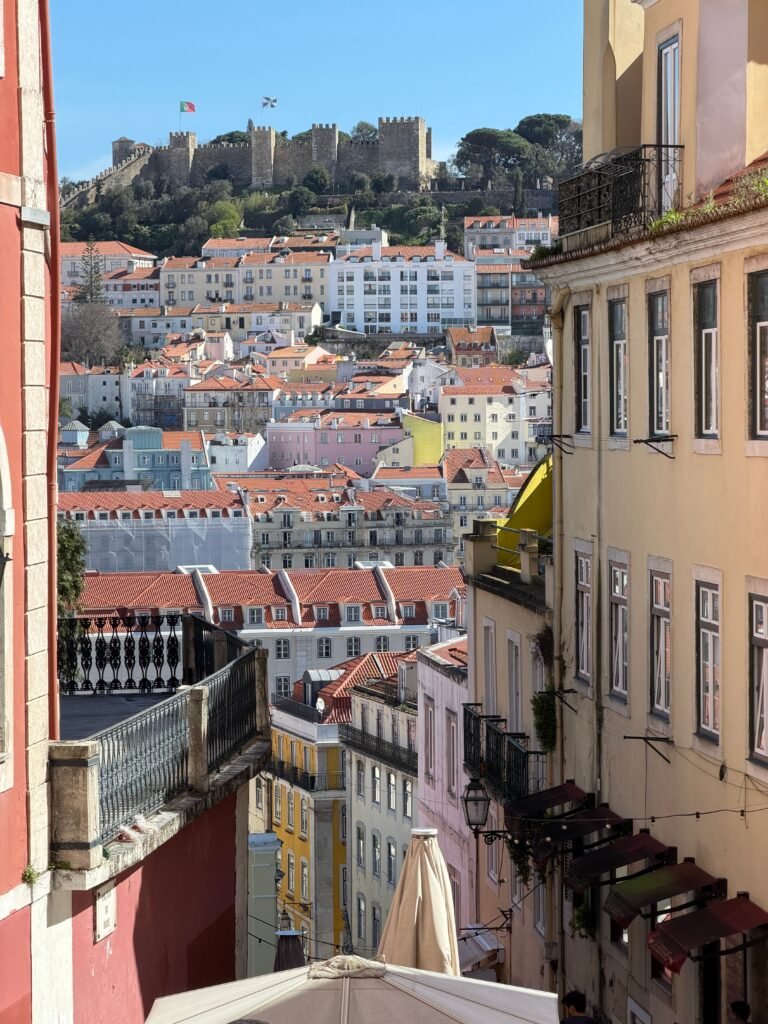
So when you lean on those walls and feel the weight of centuries, part of what you’re feeling is 1940.
Steel, Concrete and a Name on a Bridge
Monuments are the obvious part. The infrastructure is the invisible one.
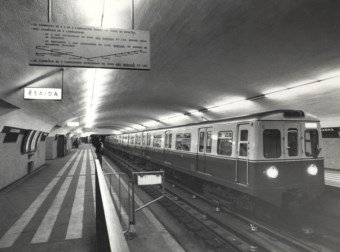
Portela Airport opened in 1942, giving the regime its gateway to the world. The Lisbon Metro had been discussed since 1888, but serious planning only began in 1948; construction started on 7 August 1955, and the network was inaugurated on 29 December 1959 — a Y-shaped line linking Restauradores to the Rotunda (today’s Marquês de Pombal), branching off to Entre Campos and Sete Rios. The spine of the modern metro still follows that original shape.
Then came the statue. Cristo Rei was inaugurated on 17 May 1959, inspired by Rio’s Christ the Redeemer, which Cardinal Cerejeira had seen in 1936. It was presented as a national thank-you for Portugal having been spared the Second World War.
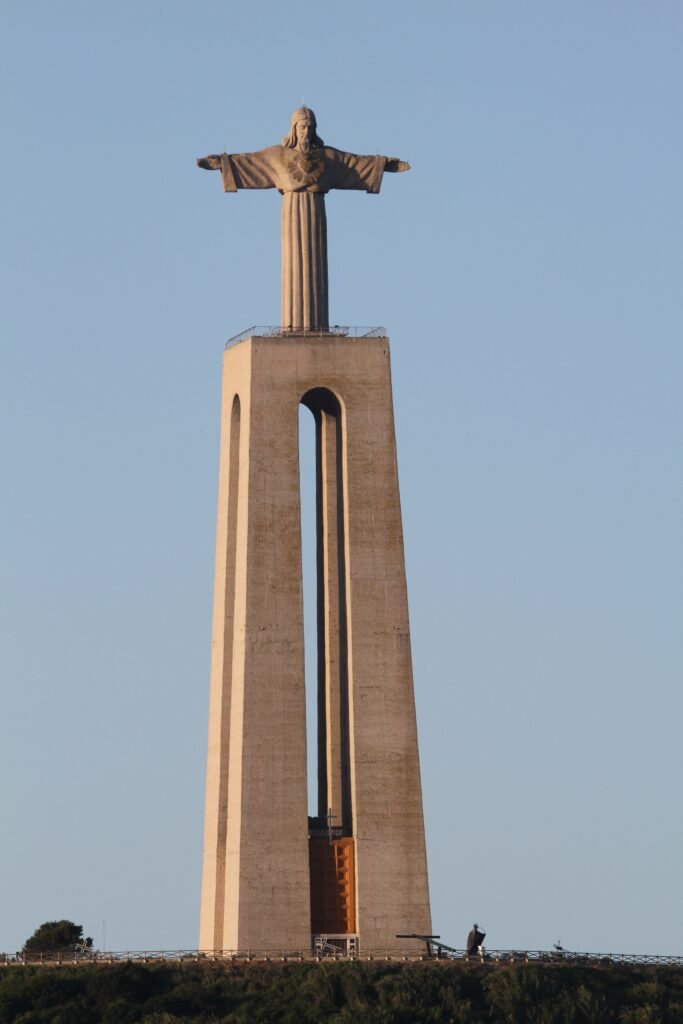
And then, the bridge. Construction began in 1962. It opened on 6 August 1966 — and it was christened the Ponte Salazar.
Eight years later, after the Carnation Revolution of 25 April 1974, it was renamed Ponte 25 de Abril. There is a famous image from those days: citizens prising the large brass letters spelling “Salazar” off one of the pillars and painting the new name in their place.
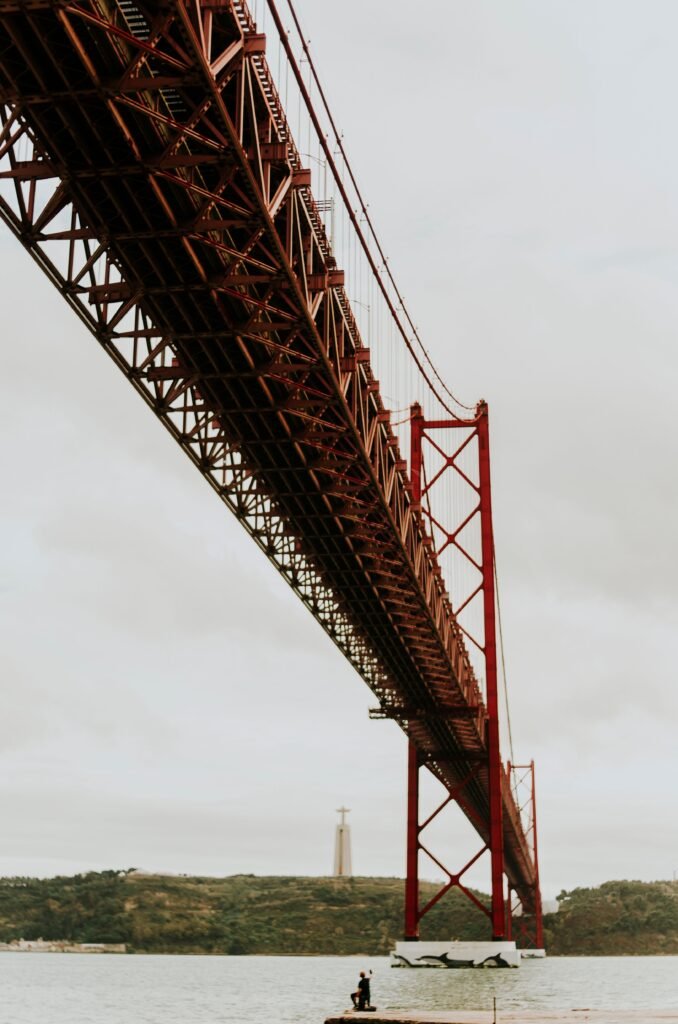
Think about that the next time you photograph it. The most iconic silhouette in Lisbon spent its first eight years wearing a dictator’s name.
The Quiet Architecture of Everyday Life
The regime’s deepest mark wasn’t on the skyline. It was in the ordinary streets.
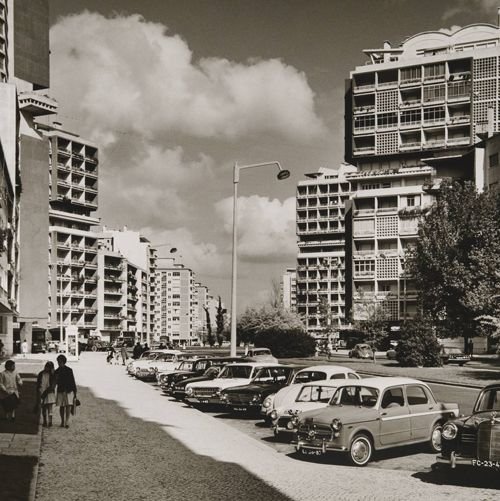
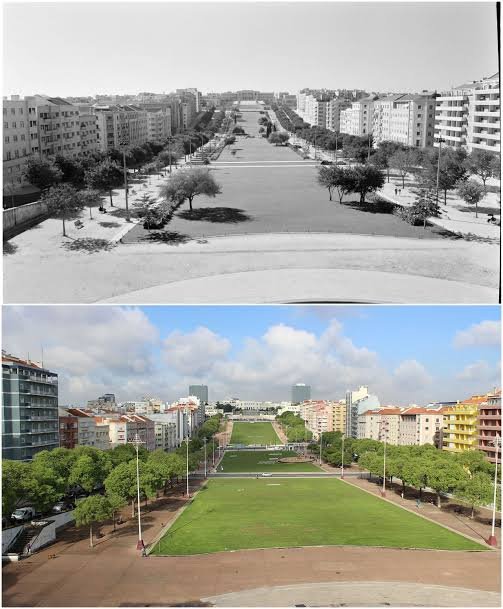
Estado Novo urbanism loved order: wide axial avenues, squares neatly framed by buildings, classical discipline, a certain sternness. Architects chased the idea of the casa portuguesa — a nationalist interpretation of what a proper Portuguese home should look like, rooted in rural tradition and immune to modernist mischief.
Entire neighbourhoods were built on that grammar. Alvalade, planned from the 1940s onward, gave the emerging middle class a Lisbon that was clean, rational, and ideologically reassuring.
Meanwhile, the censorship office and the political police — PVDE, later PIDE, later DGS — made sure nobody complained too loudly about the decor.
Why Nobody Notices
Because the regime never signed its work with a slogan.
A tidy square. A restored castle. A brand-new metro. A Christ with open arms above the river. Pleasant, orderly, patriotic — and perfectly enjoyable without ever asking who commissioned it, or why.
That’s the uncomfortable pleasure of walking Lisbon today. The city isn’t a lie. It’s a palimpsest. Pombal’s grid, Salazar’s stone, and fifty years of everything the 25th of April poured on top.
Some of these monuments are now openly debated — contested, reinterpreted, quietly modified into photo opportunities. The argument about what to do with them is still running.
Where to Read It Yourself
📍 Belém — stand at the Jerónimos Monastery and look toward the river. That whole composition was drawn up in 1940.
📍 Castelo de São Jorge — walk the walls with 1938–1940 in mind.
📍 Marquês de Pombal to Entre Campos — ride the metro’s original Y and picture 1959.
📍 Almada, across the Tagus — take the ferry, look back at the city, and meet Cristo Rei, 1959.
📍 Ponte 25 de Abril — find the pillar and try to imagine the brass letters that used to be there.
Lisbon doesn’t shout its history at you. It lets you walk on it.
So next time you cross a square and think how pretty, ask a second question: who built this — and what were they trying to make me feel?
That’s the moment a city becomes readable.
🔎 Curious to know more? Read the story of the azulejos and their hidden messages. 🚶 Want to walk through this history with me? Join my Seven Hills tour — or message me and we’ll build a route around it.


Leave a Reply