
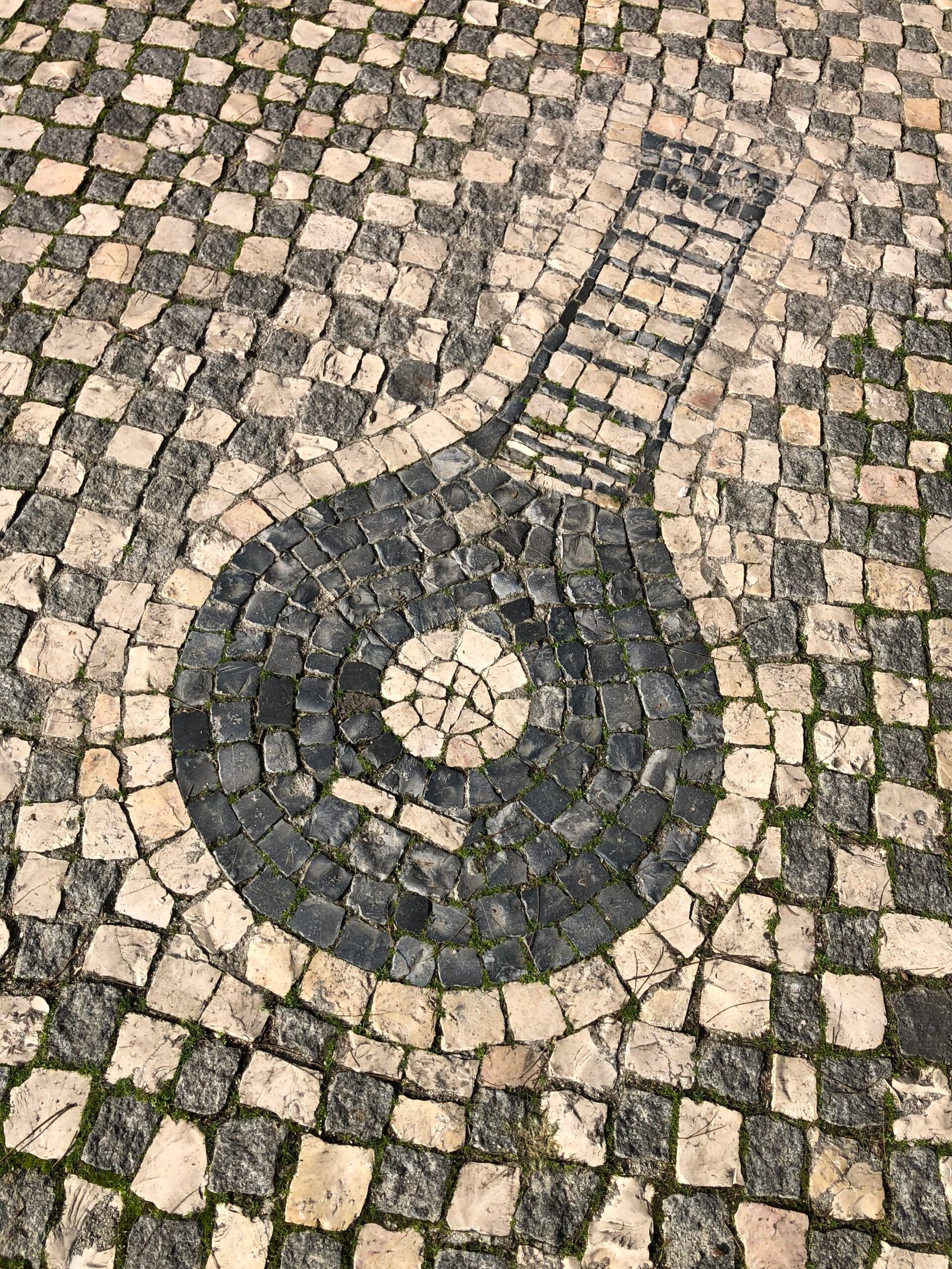
Art at Your Feet – Discover the Calçada Portuguesa
For the longest time, I believed this wild story: Lisbon’s famous cobblestones exist… because of a rhinoceros!
Legend has it that in the early 16th century, King Modofar gifted this exotic animal to the Portuguese viceroy of India, who then sent it to Lisbon as a present for King Manuel I’s birthday. And to keep the streets from turning into a muddy mess under the weight of this massive creature, the king supposedly ordered them to be paved.
Cool origin story, right? Well… in reality, Lisbon’s main streets were already paved by the time the rhinoceros arrived. But over time, the two events blended into one in people’s memories, proving just how big of an impact they had back then.
That said, the Calçada Portuguesa as we know it today—those stunning black-and-white patterns—is actually a much later invention. And trust me, its real story is just as fascinating.

A Stroke of Genius at São Jorge Castle
Fast-forward to 1842. At the time, São Jorge Castle was home to a military barracks, led by an engineer named Eusébio Cândido Pinheiro Furtado. Passionate about Roman construction techniques, he came up with an idea that would change Lisbon’s streets forever.
Under his supervision, prisoners—nicknamed the grilhetas—were put to work paving the courtyard. Using white limestone and black basalt from the surrounding areas, they created the very first decorative cobblestone pattern: a striking zigzag design full of movement.
The effect was immediate. People were fascinated by this unique style! So much so that in 1848, just six years later, the city decided to pave one of its largest squares, Rossio, using the same technique. In less than a year, 8,712 square meters were covered in black-and-white stone, giving Lisbon a brand-new identity.
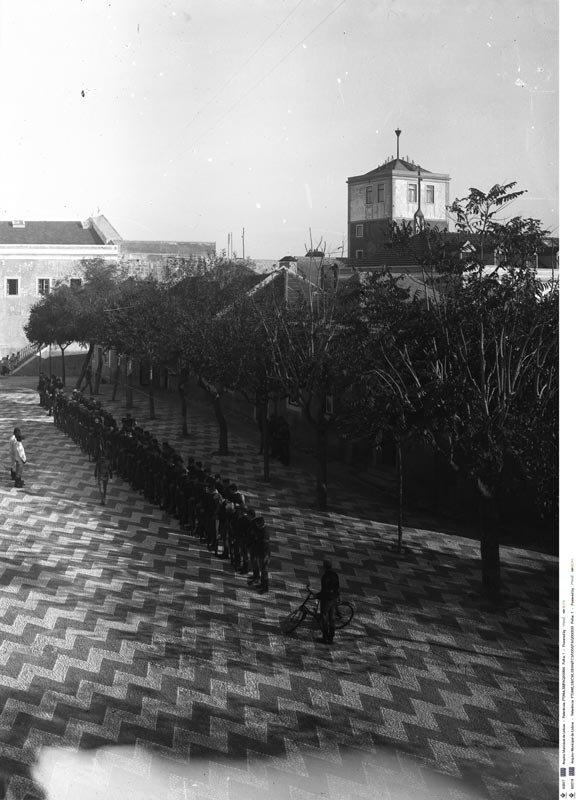
São Jorge Castle
An Art That Traveled the World
The Calçada was such a hit that it didn’t stay in Lisbon for long. It made its way overseas, most famously to Brazil, where it now graces the famous promenade of Copacabana Beach.
Even today, these patterns aren’t just decoration—they tell a story. Every step you take on Lisbon’s cobblestone streets is a step through history.
But who are the artisans behind these intricate designs?

Copacabana – Brésil
The Last Masters of the Calçada
Meet the calceteiros—the skilled craftsmen who place each stone by hand, creating these incredible mosaics. Once upon a time, there were 4,000 of them. Today? Only 18 remain, with just 11 still actively working. Yet their craft is legendary, shaping the look and feel of Lisbon’s streets in a way that no other city can match.

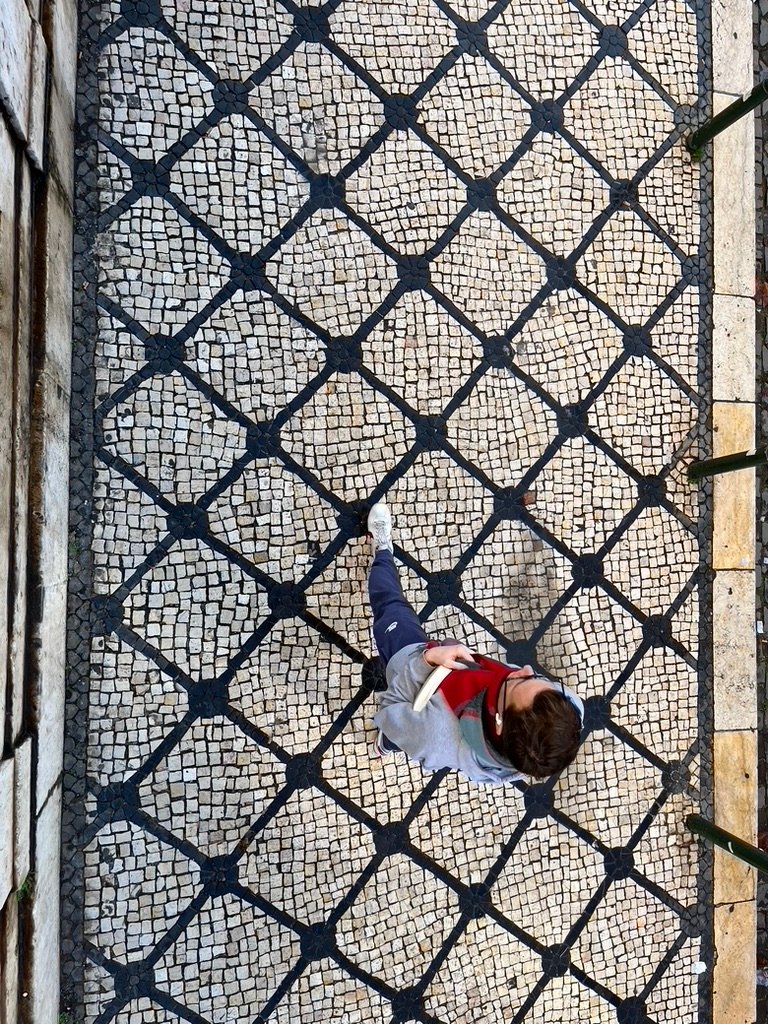
Mirador San Pedro de Alcantara
Look Down!
Next time you’re wandering through Lisbon, don’t forget to look down. These stones aren’t just sidewalks—they’re a living piece of history.
🔎 Curious to know more? Read here!
🚶♂️ Want to see them up close? Join our special tour!



Répondre à Marie Annuler la réponse